



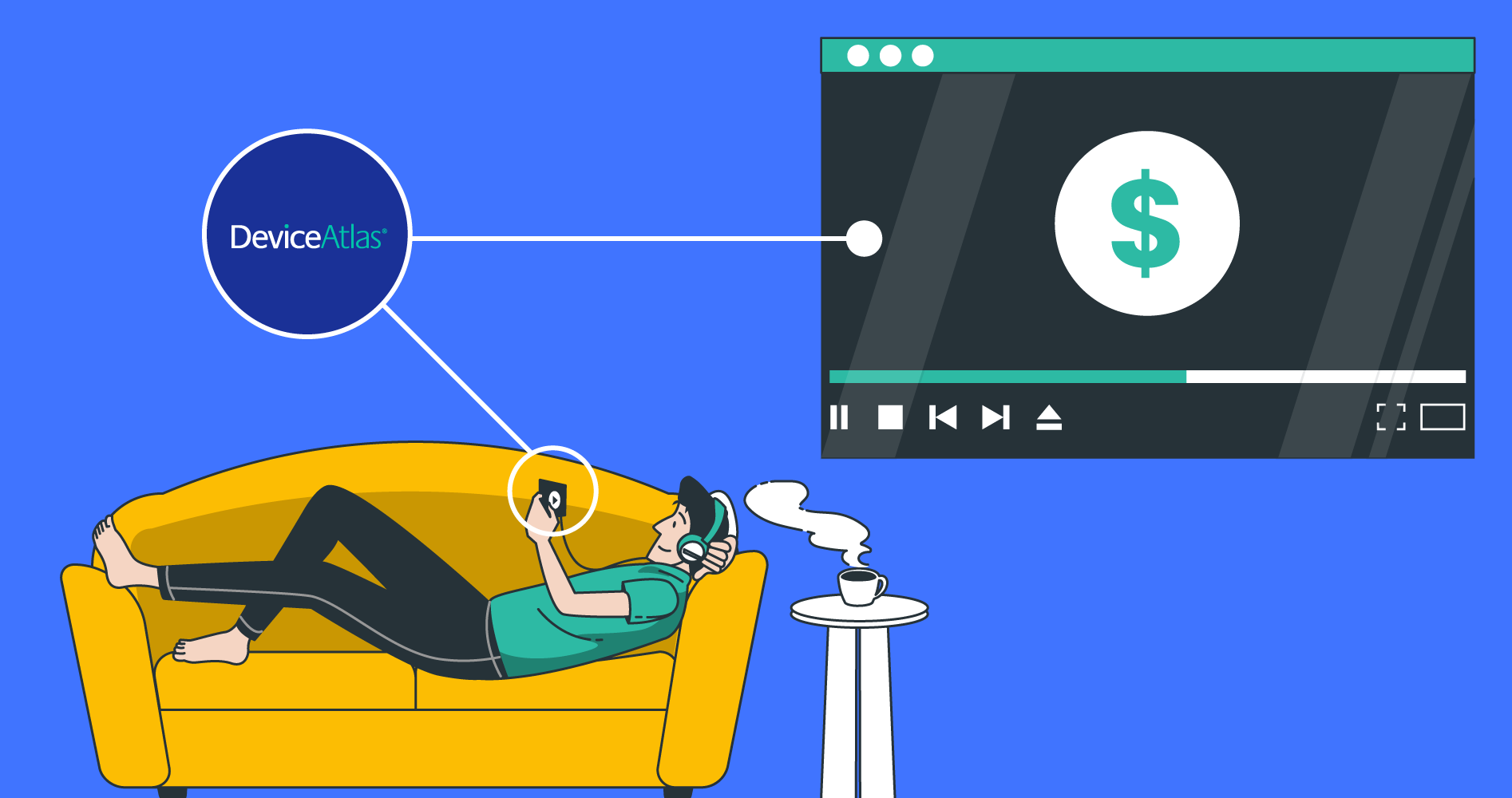
Online video streaming now dominates the global media landscape. According to Forbes, the video streaming market is valued at over $674 billion. Evidently, there are huge monetary opportunities for streaming platforms. However, they are faced with the challenge of increasing device fragmentation, leading to poor customer engagement. Understanding consumers' devices is thus becoming paramount for maintaining customer engagement and satisfaction.
The three key staple monetization models in the CTV landscape are AVOD, SVOD, and FAST. AVOD (e.g. YouTube) and FAST (e.g. Pluto TV) rely heavily on advertising revenue for their business models. Therefore, using device data to offer customer signals is a vital way to enable them to fine tune their ad targeting for the right audiences. SVOD (e.g. Netflix), a model built on subscriptions, is in a highly-competitive OTT landscape. Keeping users satisfied with high-quality viewing experiences is the difference between profit and loss.
Although each of the models place different demands on delivery, they all rely on one shared requirement: knowing exactly what devices customers use to stream their content. Device intelligence can help CTV publishers efficiently identify viewer’s devices which can help maximize streaming experiences and revenue.
The Challenge Facing CTV Publishers
One of the biggest challenges faced by CTV publishers is CTV identification. Many publishers rely on TV API integrations from their player apps to find out devices’ capabilities. The main issue is that it’s time consuming and costly for publishers to manually figure out what the TV can support. Additionally, non-mainstream OEMs and older models fall through the cracks. Users viewing on those devices get a much poorer viewing experience.
Instead of this inefficient CTV/API process, streaming companies can turn to device intelligence to uncover the capabilities of the end user device in real time. With a solution such as DeviceAtlas, CTV publishers can obtain devices’ full capability set through a simple lookup. This alternative enables immediate decision-making on the best content to serve, leading to lower maintenance costs, new global markets, and improved customer satisfaction by supporting a wider range of older and less-mainstream devices. You can learn more by reading our blog Why CTV Apps Should Use Device Intelligence to Identify Devices
The Role of Device Intelligence
A robust device intelligence solution is crucial for streaming companies to deliver seamless content by providing accurate and reliable metadata on all user devices.
DeviceAtlas in particular provides full clarity on the most important device capabilities to prevent outages and playback errors. It can detect the device type, model, stream levels, screen size, resolution, bit architecture, CPU cores and more. Below we take a look at how various monetization models are impacted both with and without device intelligence when catering for their audiences.
AVOD
Device misclassification can have a dramatic effect on AVOD revenue. A lack of CTV device characteristics and inaccurate device detection damages the user experience across various devices. When CTVs are misidentified, AVOD platforms serve unsuitable content to the wrong devices.
Benefits of integrating DeviceAtlas:
- Potential to turn every CTV view into premium ad value.
- Identify each TV model; serve correct creative and bitrate.
- Stop mobile CPMs leaking into big-screen inventory.
- Give buyers transparent device data and strengthen trust.
SVOD
Device fragmentation is only becoming more prevalent as more devices are being manufactured and sold. The need for differentiation is critical, and continuously measuring and improving UX is a major factor in companies succeeding. Subscriber churn is primarily caused by low quality streaming and poor user experiences.
Benefits of integrating DeviceAtlas:
- Catch device-driven churn before subscribers cancel.
- Flag low-end phones with high buffer events for proactive fixes.
- Isolate firmware-specific crashes on legacy TVs.
- Feed device segments to personalization and QA teams.
FAST
FAST platforms are a free service and thus, maximizing ad views across user devices is crucial for their revenue potential. If they display ads to the wrong users on the wrong devices, their model is destined for failure — they won’t be able to encourage conversions.
Benefits of integrating DeviceAtlas:
- Deliver stable linear channels across fragmented TV platforms.
- Align EPG layout per device type for friction-free surfing.
- Sync ad-break timing with each device’s performance budget.
- Block emulators and spoofed devices undermining monetization.
Case Study: Upstream
A great example of how DeviceAtlas can be used to boost revenue for publishers in the streaming industry is Upstream. As rarer devices began showing up on the system, it became more difficult and time consuming to reliably identify the traffic. Their in-house solution quickly became unworkable for their device intelligence needs.
After implementing DeviceAtlas, Upstream accessed ultra-fast lookups that significantly improved monetization capabilities and reduced maintenance costs. You can read the full story by checking out our case study.
Conclusion
With both device diversity and streaming popularity rising, the need for device intelligence to support streaming companies has never been more important. A solution like DeviceAtlas can enable streaming providers to reliably identify OTT traffic and stay on top of the CTV device landscape. Moreover, knowing the device is the key to driving streaming revenue.